Report
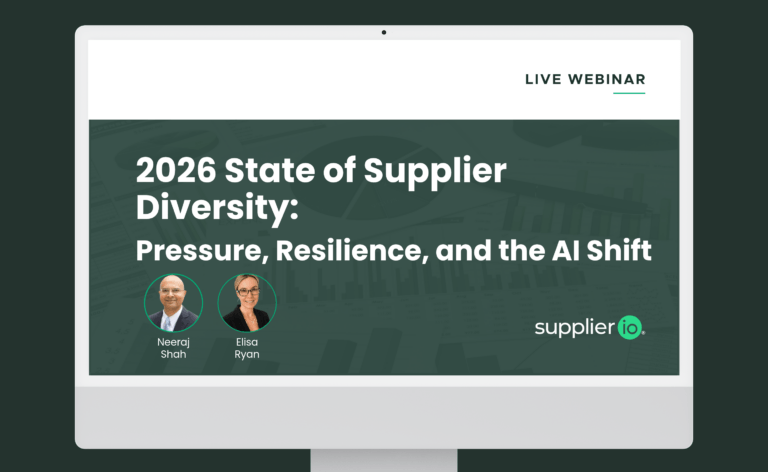
The 2026 State of Supplier Diversity Report
Programs are heading into 2026 older, leaner, and under more pressure than the headlines suggested, but they are not retreating. The 2026 State of Supplier Diversity Report gives you an exclusive look at how leaders are repositioning their programs around resilience, managing new political and regulatory pressure, and putting AI to work, all while holding onto the executive support that’s kept these programs funded for years.
Built from insights shared by 194 procurement, sourcing, and supplier diversity leaders, the report reveals what separates programs that are closing the gap between proving impact and measuring it from those still trying to catch up. It gives you the data you need to benchmark your program, make the business case internally, and set a realistic roadmap for the year ahead.
What’s inside:
- Why political and regulatory change became the top challenge for supplier diversity programs this year, and how established programs are repositioning instead of retreating
- Why supply chain resilience overtook corporate culture as the number one reason programs exist, for the first time in nine years of this report
- Where AI is already being used in supplier programs today, and the data quality work that has to happen before it scales
- Five concrete actions for closing the decade-old gap between the impact your program creates and the impact you can prove
Download the 2026 State of Supplier Diversity Report to see where your program stands against 194 peers, and what the strongest teams are doing differently.