
Entity Resolution & Matching
Every supplier in your vendor master, matched to one verified identity
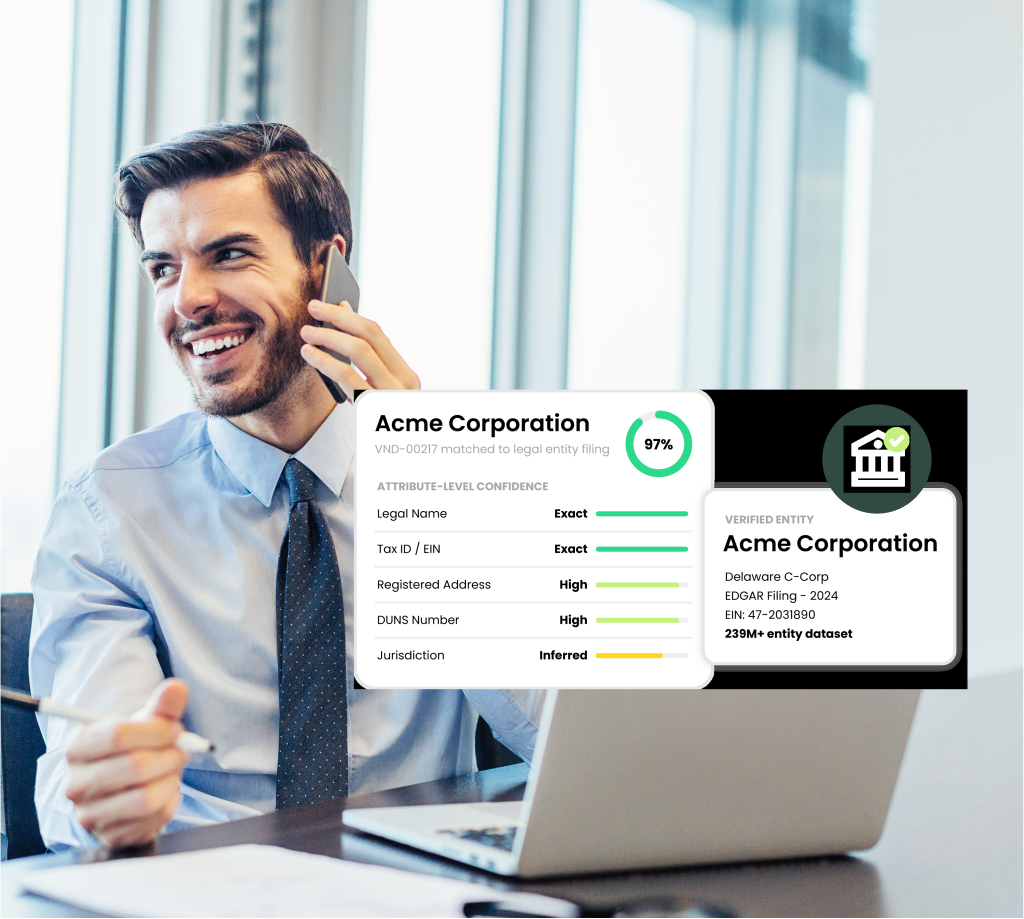
Most vendor master problems start here: the same supplier appears under dozens of names across dozens of systems, and no one can agree on who it actually is. Atlas resolves that at the root, matching every supplier record to a verified legal entity (registered company identity) from primary source registrations across 145 countries. ~85% of records match automatically. Every match is explainable.



















Verified supplier hierarchy data
legal entities (registered company identities) serving as verified anchor points across corporate hierarchies
automated match rate against real-world vendor master records
countries covered for cross-border parent-child and ultimate ownership relationships


Duplicate records, stale data, and unresolved supplier identities drive duplicate payment risk, compliance exposure, and analytics that can’t be trusted. See what unreliable supplier data is really costing your organization and how to fix it at the source.
Read the ReportENTITY RESOLUTION OVERVIEW
How Atlas resolves a supplier record
How it works. Why it’s trustworthy.
Atlas begins with name, address, registration number, and unique identifier logic, matching vendor records against primary source legal entity filings at the country and jurisdiction level. This initial pass resolves the majority of records without any ambiguity.
For records that don’t resolve cleanly on structured identifiers alone, Atlas applies AI-assisted confidence scoring. Each candidate match is assessed across multiple attributes, the highest-confidence candidate is selected, and low-confidence matches are flagged for human review rather than auto-resolved.
Records that don’t meet the confidence threshold go to a dedicated data operations team for manual review. Every escalation is resolved by a person, not a fallback algorithm. The methodology stays consistent and auditable at every tier.
Once resolved, every supplier record carries the matched attributes, confidence score, and source documentation that produced the result. Your team can audit any match decision at any time without asking a vendor to explain their own logic.




Frequently asked questions
Details about entity resolution and matching
What is entity resolution?
Entity resolution is the process of matching a supplier record in your vendor master to a verified legal entity (registered company identity), confirming who the supplier actually is against a primary source registration. It removes ambiguity from vendor data by anchoring every record to a verifiable public filing rather than an internally assigned name or ID.
How does Atlas match supplier records?
Atlas uses a three-tier process: rule-based matching on structured identifiers first, AI-assisted confidence scoring for records that don’t resolve cleanly, and human review for low-confidence exceptions. Every match produces a confidence score, matched attributes, and source documentation so the result is fully auditable.
What happens to records Atlas can’t match automatically?
Records that don’t meet the confidence threshold are escalated to a dedicated data operations team for manual review. No record is auto-resolved below threshold. The ~85% automated match rate reflects records resolved with high confidence, not total records processed regardless of quality.
How do we know the match is right?
Every resolved record includes the specific attributes that produced the match, the legal entity it was resolved against, and the confidence score at the attribute level. Your team can review and audit any match decision independently. There is no black-box methodology and no requirement to trust a score without seeing what produced it.
Additional insights



Speak with an expert on supplier data
See how Atlas resolves your vendor master against 239M+ legal entities and gives every system a verified supplier identity to build on.